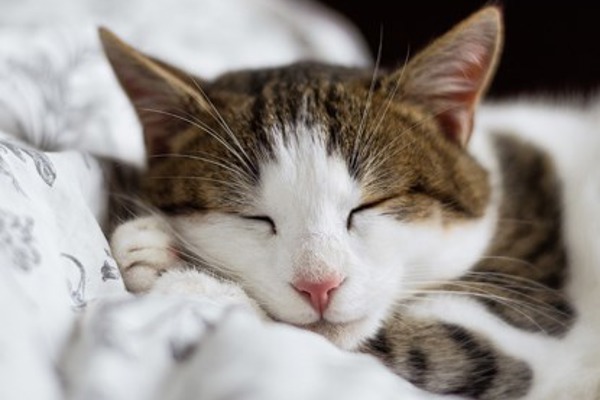
Your cat is fast asleep on the sofa. Suddenly their whiskers twitch. One paw jerks. Their ears flick as though they’re listening to something only they can hear.
It’s enough to make any cat owner wonder: are they dreaming?
The short answer is: probably, but we can’t know for sure.
That might sound surprising, but despite the millions of cats sharing our homes, scientists still know relatively little about what happens inside a cat’s mind while they sleep. In fact, this is one of those topics where the science is surprisingly limited. There’s very little direct evidence on whether cats dream, and much of what we think we know comes from studies of feline sleep patterns and comparisons with other mammals.
What researchers do know is that cats experience rapid eye movement (REM) sleep, the stage most closely associated with dreaming in humans. Because cats share many of the same sleep patterns as us, scientists believe it’s likely they experience some form of dreaming too.
But what they dream about, and whether their dreams resemble our own, remains one of the many mysteries of feline behaviour.
Cat sleep cycles and why they may dream
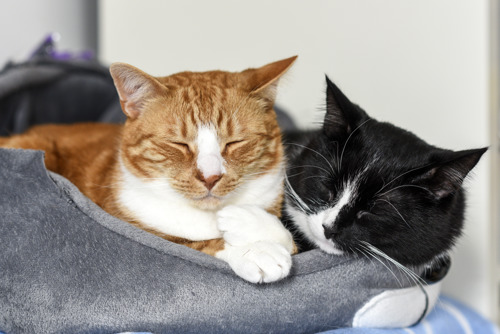
Cats are famous for sleeping, and for good reason. Most adult cats sleep for around 16 hours a day, although some sleep even longer.
Unlike humans, who often sleep in one long stretch, cats tend to snooze in shorter bursts throughout the day and night. This reflects their natural behaviour as hunters, conserving energy between periods of activity.
While they may look completely switched off, a sleeping cat’s brain is still busy.
Like humans and many other mammals, cats cycle through different stages of sleep. These include:
- non-REM sleep, when the body rests and recovers
- REM sleep, when brain activity increases
Studies have shown that cats move through these stages in repeated cycles. In humans, REM sleep is strongly linked to dreaming, which is why researchers think cats may also dream during this stage.
However, REM sleep isn’t proof of dreaming. While the similarities between feline and human sleep are fascinating, we can’t directly access a cat’s experiences while they’re asleep.
Signs your cat may be dreaming
Many cat owners notice their cat twitching or moving while they sleep and assume they’re dreaming.
During REM sleep, cats may:
- twitch their whiskers
- flick their ears
- move their paws or legs
- show rapid eye movements beneath closed eyelids
- make small noises or quiet vocalisations
These behaviours are usually completely normal and are thought to reflect activity within the nervous system during sleep.
While these movements often occur during REM sleep, they don’t tell us exactly what your cat is experiencing. A twitching paw might look like they’re chasing something, but we can’t know whether they’re dreaming, or what they might be dreaming about.
If you’d like to learn more about feline sleep, read our guide to cats and sleep.
What do cats dream about?
This is where the mystery deepens.
Despite what you may read elsewhere, there is currently no scientific evidence showing what cats dream about. Much of the information available online is based on assumptions rather than research.
However, because REM sleep is linked to memory processing in humans and other mammals, some scientists think that if cats do dream, those dreams may relate to familiar experiences.
That could include things such as:
- playing with favourite toys
- exploring their surroundings
- hunting and stalking prey
- interacting with other animals
- spending time with familiar people
If you’ve ever wondered whether your cat dreams about you, you’re certainly not alone. But while it’s a comforting thought, we simply don’t know whether cats replay memories or experiences in the same way humans do.
The truth is that we’ll probably never know exactly what’s happening behind those twitching whiskers and flicking paws.
Why sleep is so important for cats
While dreaming remains uncertain, there’s no doubt that sleep itself is essential for a cat’s health and wellbeing.
Cats evolved as hunters that rely on short bursts of activity. Sleeping for long periods helps them conserve energy between those periods of activity.
Sleep supports:
- physical recovery
- immune system function
- brain activity and regulation
- growth and development
- overall wellbeing
Kittens spend even more time asleep than adult cats, and also spend a greater proportion of their sleep in REM sleep. Scientists believe this may play an important role in healthy brain development.
Older cats may experience lighter or more fragmented sleep patterns, but sleep remains just as important throughout their lives.
Whether they’re curled up in a sunny spot or stretched across your bed, all those hours spent snoozing are helping to keep your cat healthy.
When should you be concerned about sleep behaviour?
A twitching whisker or flicking ear is usually nothing to worry about.
However, changes in sleep behaviour can sometimes indicate that something isn’t quite right.
It’s worth speaking to your vet if you notice:
- sudden changes in your cat’s sleeping habits
- significant increases or decreases in the amount they sleep
- prolonged, intense or repetitive movements during sleep
- unusual breathing patterns while asleep
- loss of bladder or bowel control during sleep
- behavioural changes such as withdrawal, anxiety or irritability
If possible, try recording a video of the behaviour to show your vet. This can often be helpful when assessing what might be happening.
Frequently asked questions
Do cats dream about their owners?
There's no scientific evidence that cats dream about their owners specifically.
However, if cats process familiar experiences during sleep, it’s possible that people they know could feature in those experiences. At the moment, though, we simply don’t know.
Do cats have dreams and nightmares?
Scientists don’t currently know whether cats experience dreams or nightmares in the same way humans do.
If cats do have dream-like experiences, it’s possible that some may be unpleasant. However, there is currently no evidence confirming that cats experience nightmares.
Can cats dream?
Cats experience REM sleep, a stage strongly associated with dreaming in humans. Because of this, scientists believe cats probably experience some form of dreaming, although this hasn’t been directly proven.
Do cats dream when they sleep?
If cats dream, it is most likely during REM sleep rather than throughout all stages of sleep. REM sleep is when cats show behaviours such as twitching whiskers, flicking ears and small paw movements.
Can I wake my cat up from a dream?
It’s generally best not to disturb a sleeping cat.
Cats need a large amount of sleep to stay healthy and waking them abruptly may cause unnecessary stress.
Why does my cat twitch while sleeping?
Small twitches of the whiskers, ears, eyelids or paws are common during REM sleep and are usually normal.
If the movements become intense, prolonged or are accompanied by other concerning symptoms, contact your vet for advice.
Do indoor and outdoor cats dream differently?
We don’t know.
Indoor and outdoor cats have different daily experiences, so if dreaming is linked to memory or experience, there could be differences. However, this hasn’t been studied.
Do kittens dream more than adult cats?
Kittens spend more time in REM sleep than adult cats, which is thought to support brain development.
Whether this means they dream more than adult cats is unknown.