When my beloved cat Coco died in 2024 at the age of 18, I worried most about the cat she left behind.
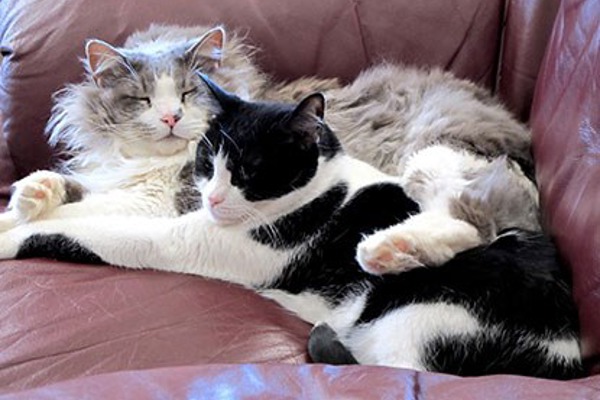
I’d adopted Rudy as a kitten two years earlier and, despite the age difference between them, the pair had quickly become close companions. They shared sleeping spots, spent time together and seemed genuinely comforted by each other’s company.
So when Coco passed away, I found myself asking a question many cat owners have probably wondered:
Was Rudy lonely?
Like many people, I assumed another cat might help. After all, Rudy had enjoyed living with Coco. Surely he would benefit from having another feline friend in his life?
That’s how Lula came into our family.
Looking back, I can see that I made a very human assumption: because Rudy had loved one cat, he would love another.
Unfortunately, cats don’t always see things the way we do.
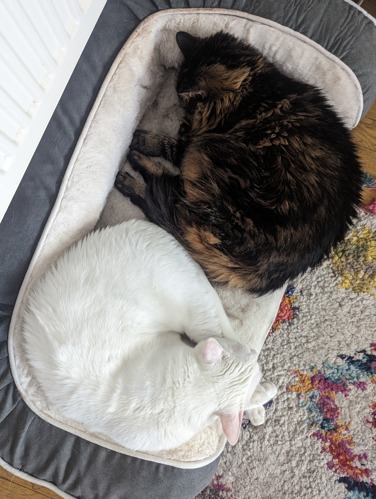
Do cats need another cat?
It’s easy to imagine that cats experience companionship in the same way people do. When we lose someone important, we often seek comfort from others, so it’s natural to think our cats might want the same.
But cats are individuals.
Some cats form close social bonds with other cats, particularly if they’ve grown up together or developed a strong relationship over time. Others are happiest being the only cat in the household.
What I eventually realised was that Rudy wasn’t necessarily missing a cat after Coco died. He was missing Coco.
Those are two very different things.
When two cats don’t click
At first, Rudy and Lula tolerated each other. They weren’t best friends, but they could share the same space.
I told myself that was a positive start, but it was far from the harmonious home I’d imagined for them both.
Over time things became more difficult. The tension between them increased. What began as cautious coexistence, which was a challenging starting point in itself and didn’t bode particularly well for their future stress levels, turned into stand-offs, chasing and fights. Rather than growing closer, they seemed increasingly uncomfortable around one another.
We hoped things would improve, but eventually we reached a point where they could no longer safely share the same parts of the house.
Our home became divided by closed doors.
Rudy would have access to one area while Lula occupied another. Then we’d swap them over. Every day involved careful routines designed to keep them apart.
Even our attention became something that had to be managed and shared on a schedule.
For a while, I convinced myself that this arrangement was working. Both cats were safe, loved and cared for.
But then I started thinking about the situation differently.
Looking at life through a cat’s eyes
At Cats Protection, we often talk about understanding cats and seeing the world from their perspective.
When I applied that thinking to my own situation, I found myself asking some difficult questions.
What did life look like from Rudy’s perspective?
What did it look like from Lula’s?
Instead of seeing two cats I loved and desperately wanted to keep together, I saw two cats whose home had been divided into territories. Two cats who couldn’t fully relax. Two cats who were living with ongoing stress.
The arrangement was helping me avoid making a painful decision, but it wasn't helping the cats thrive.
That realisation was heartbreaking.
Sometimes the kindest decision is the hardest one
One of the most common misconceptions about multi-cat households is that if cats aren’t getting along, someone must have done something wrong.
But that’s not always the case.
While careful introductions and behavioural support can often help, some cats simply aren’t suited to living together. Just like people, cats have individual personalities, preferences and social needs.
Recognising that isn’t a failure.
In our case, after exhausting our options, we made the difficult decision to rehome Lula.
It was one of the hardest decisions I’ve ever made.
I worried that I was letting her down. I felt guilty. I questioned myself repeatedly.
How would we find someone who’d love Lula as much as we did?
But once again, I tried to look at the situation through our cats’ eyes rather than my own. I realised it was unfair to keep Rudy and Lula together. What mattered most wasn’t my sadness. It was their welfare.
What Rudy and Lula taught me
After Lula moved to a home that better suited her needs, the difference was remarkable. She settled beautifully and was able to enjoy a space that was entirely her own. Rudy relaxed too, and the tension that had become part of daily life gradually disappeared.
The experience taught me an important lesson: every cat is an individual.
Sometimes a cat may enjoy living with another feline companion. Sometimes they won’t. And sometimes the kindest thing we can do is let go of our expectations and focus on what our cats are telling us.
I adopted Lula because I thought Rudy needed a friend.
What Rudy and Lula ultimately taught me was something far more important: understanding cats means accepting that they don’t always want the things we think they should.
And when we shift our focus to see life through their eyes, we can make decisions that help give them their best possible life.