Discover what common cat sleeping positions may mean, from curling into a ball and sleeping in a loaf position to sleeping close to you.
Cats can sleep in all kinds of positions, from tightly curled balls and neat little loaves to sprawling poses that hardly look comfortable at all. But what do cat sleeping positions mean, and can they really tell you how your cat is feeling?
While a cat’s sleeping position may offer clues about their comfort, temperature or mobility, it’s best not to read too much into it. Most positions simply come down to what feels comfortable for that individual cat.
What matters more is knowing what is normal for your cat. A sudden or persistent change in their sleeping position or habits can sometimes indicate that something is wrong, particularly if you notice other changes in their health or behaviour.
What can a cat’s sleeping position tell you?
A cat’s sleeping position can sometimes provide clues about how comfortable, warm or mobile they are. However, there isn’t a fixed meaning behind every pose. Cats have individual preferences and will often change position depending on the temperature, their surroundings and what feels comfortable at that moment.
Age and health can also influence how a cat sleeps. For example, a cat with arthritis may avoid positions that are uncomfortable or find it more difficult to curl up tightly.
It can also be helpful to notice the difference between resting and sleeping. A cat resting with all four paws on the ground may be ready to move and not completely settled. In contrast, a cat with their legs tucked underneath them may be more relaxed.
Some cats may also appear to be asleep while remaining alert to their surroundings. Their eyes may be closed, but their ears continue moving towards sounds. This is sometimes known as ‘feigning sleep’ and may be seen when a cat feels stressed or does not feel completely secure, including in a home where cats are not comfortable around one another.
The most useful approach is to consider the cat’s whole posture and behaviour, rather than trying to interpret one sleeping position on its own.
Common cat sleeping positions explained
Cats can sleep in all kinds of positions. While some may offer clues about warmth or comfort, there is rarely one fixed meaning behind a particular pose. Here are some of the most common cat sleeping positions and what they may mean.
Curled into a ball
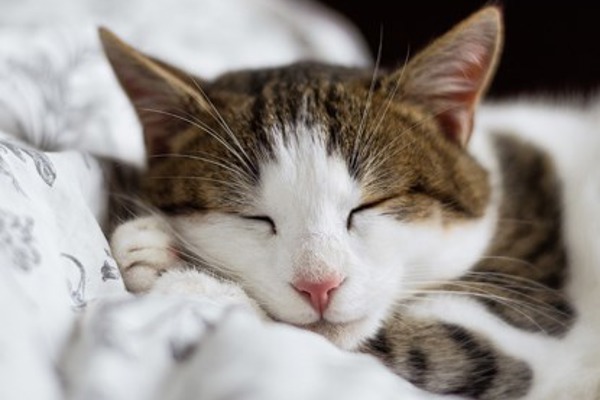
Seeing a cat curled up sleeping is very common. Drawing their legs close and wrapping their tail around their body may help them conserve heat, particularly when the weather is cold. They may also simply find this position comfortable.
Although people may assume that a cat sleeping in a ball is protecting themselves, the position alone cannot tell us whether they feel safe or anxious. Look at their wider body language and consider whether this is a normal position for them.
Stretched out on their side
Some cats sleep stretched out on their side with their legs extended. This is another common and normal position that is probably chosen because it feels comfortable.
Stretching out may also help a cat lose heat more easily than curling into a ball, so you might notice your cat adopting this position more often on a warm day.
The loaf position
In the classic loaf position, a cat rests upright with their paws tucked neatly underneath their body. This is commonly seen when cats are relaxed and comfortable.
However, not every loaf looks the same. A relaxed cat is likely to appear settled, with loose muscles and a comfortable head position. If your cat looks tense, keeps their head lowered or appears unable to settle, consider whether there have been any other changes in their behaviour or health.
Sleeping with their head down
Some cats may occasionally sleep in a loaf position with their head lowered simply because it is comfortable for them. However, a lowered head combined with increased muscle tension, altered breathing or another change from your cat’s usual posture could suggest discomfort.
Sleeping with their head down is not enough on its own to show that a cat is unwell. Look for other physical or behavioural changes and speak to your vet if you are concerned.
Sleeping on their back
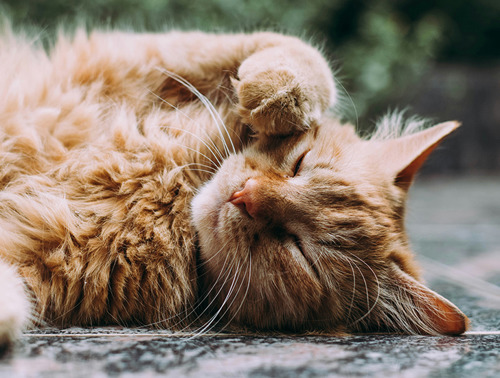
A cat sleeping on their back with their stomach exposed can look completely relaxed. While they may have chosen this position because they feel comfortable, it’s difficult to know exactly what any individual sleeping position means.
An exposed stomach is also not necessarily an invitation to touch it. Many cats dislike having this sensitive area stroked, even when they appear relaxed.
Sleeping with their face covered
A cat may cover their face with their paws or tail to block out light or conserve some warmth. Equally, it may simply be a position they find comfortable.
If your cat regularly sleeps this way and otherwise appears healthy and relaxed, there is usually no reason for concern.
Sleeping in an unusual position
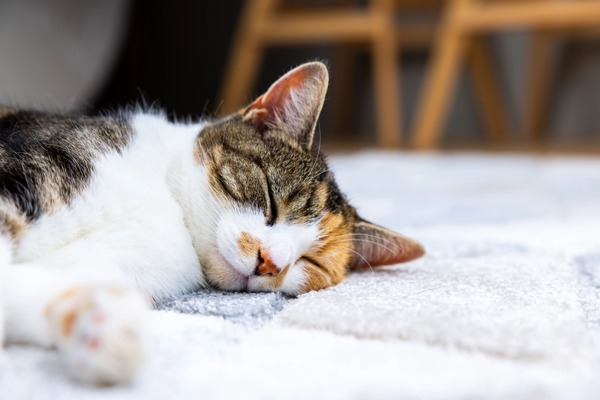
Cats are flexible and can sleep in positions that look twisted or uncomfortable to us. If your cat appears relaxed, is breathing normally and can get up and move easily, the position is probably comfortable for them.
You might also find your cat asleep in some unusual places. Learn more about why cats sleep on the stairs and how to create the perfect sleeping spot for your cat.
Cat sleeping positions with their owner
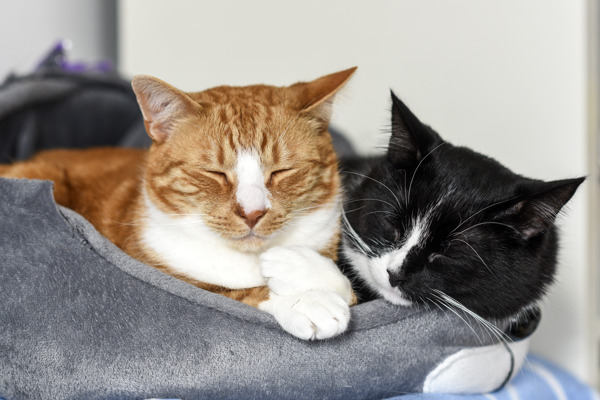
Cats may sleep on or beside their owners for several reasons, including warmth, comfort and social bonding. Where they position themselves is likely to depend on what feels comfortable and secure to them.
The position your cat adopts is usually less informative than their overall behaviour and any changes in their normal sleeping habits. Some cats enjoy sleeping close to people, while others prefer to have their own space.
Find out more about why your cat sleeps on you.
Cat sleeping positions when sick
There is no single ‘sick cat sleeping position’, and posture alone cannot confirm whether a cat is unwell or in pain. A change from your cat’s normal sleeping position or habits is usually more important than the position itself.
For example, a cat who usually curls into a ball may suddenly begin sleeping stretched out, or a cat who normally sleeps in an open area may start hiding away. This does not necessarily mean they are unwell, but it is worth looking for other changes.
Signs to be aware of include:
- reduced appetite
- drinking more or less than usual
- hiding or withdrawing more than usual
- reduced activity or lethargy
- reluctance to jump, climb or move
- stiffness or difficulty getting comfortable
- changes in grooming
- altered toileting habits
- weight loss
- changes in breathing, including breathing faster or with more effort
- breathing with an open mouth
Contact your vet if you notice a sudden or persistent change in your cat’s sleeping position or habits alongside other possible signs of pain, illness or discomfort. Difficulty breathing or breathing with an open mouth requires urgent veterinary attention.
For more information about cats’ sleeping habits, read our guide to cats and sleep.
How to read sleeping positions alongside body language
Rather than focusing on one position, look at your cat’s whole body and wider behaviour.
A comfortable, resting cat will generally have loose muscles and appear settled. Their breathing should look normal, and they should be able to get up and move without difficulty.
Look at:
- muscle tension: does their body look loose and comfortable, or tense and hunched?
- ears: are they relaxed, or constantly turning towards sounds while the cat appears to be asleep?
- face: does their expression look relaxed, or are their eyes narrowed and their face tense?
- tail: is it resting loosely, wrapped comfortably around them or held tensely against the body?
- breathing: is it quiet and regular, or faster and more effortful than usual?
- movement: can your cat stand, walk, jump and climb as normal?
- wider behaviour: are they eating, drinking, grooming and toileting as usual?
Above all, get to know what is normal for your individual cat and prioritise their comfort over convenience when choosing where to place their bed. Sleeping positions are usually a matter of personal preference, but a noticeable change in posture or behaviour may be worth monitoring.
Frequently asked questions
What is the best position for a cat to sleep in?
There is no single best or healthiest sleeping position for every cat. A comfortable, healthy cat will generally choose the position that suits them at that moment.
What does a cat’s sleeping position tell you?
A sleeping position may offer clues about a cat’s comfort, temperature or mobility, but it rarely has one fixed meaning. Consider the position alongside the cat’s normal habits, environment, age, health and wider body language.
What does it mean when a cat sleeps in a ball?
Curling into a ball may help a cat conserve warmth, or they may simply find it comfortable. On its own, the position does not tell us very much about how the cat is feeling.
Are cats happier if they sleep with you?
Choosing to sleep near you may be linked to warmth, comfort or social bonding, but it does not provide a reliable measure of happiness. Cats have different preferences, and some feel more comfortable sleeping alone.
What is a sick cat’s sleeping position?
There is no particular sleeping position that proves a cat is unwell. A persistent change from their normal posture is more significant, especially if it occurs alongside reduced appetite, hiding, altered breathing, difficulty moving or another behaviour change.
Why does my cat sleep in the loaf position with their head down?
Your cat may simply find the position comfortable. However, if their lowered head is accompanied by muscle tension, altered breathing, reduced appetite, lethargy or difficulty moving, contact your vet for advice.