Donate

Cat stress

Worried about your cat’s unusual behaviour? Take a look at our guide on spotting signs of stress in your cat.

Cat stress

Worried about your cat’s unusual behaviour? Take a look at our guide on spotting signs of stress in your cat.

Need more cat advice?

Get free cat care tips and inspiring cat stories straight to your inbox.

Stress in cats

Cats are subtle animals and it can be tricky to tell if you’ve got a stressed cat in your home. Their behaviour might change slightly, or they might begin to do things that you perceive as ‘being naughty’. In fact, the domestic cat can be great at hiding signs of stress or signs that they’re in pain, it’s in their nature. In the wild, this would help them avoid becoming an easy target for predators.

If your cat is stressed, they can become emotionally and physically unwell, resulting in problem behaviours and a worrying time for both cat and owner.

A black cat hiding under a yellow chair

Your cat’s response to stress

Like humans, there are many reasons cats get stressed. Stress is an immediate response to a threat that activates the cat’s ‘flight or fight’ response. It is important you spot the signs of stress in cats and try to reduce that stress as much as possible to ensure your cat stays healthy.

Perhaps your moggy has started scratching the furniture when they didn’t before, or spending all their time hiding in the airing cupboard? If they were a confident cat previously, the likelihood is that something is making them feel stressed.

Understanding cat emotions

From an emotional perspective, cats can feel fearful, anxious, frustrated, or even depressed. They can also have an emotional response to pain (for example, being in pain is stressful and tiring). Additionally, being bored can cause stress. It’s a common misconception that cats feel jealousy, spite, or want to get revenge. As far as science can tell us, cats don’t feel these things.

It’s important to understand your cat’s underlying emotions as this can help you to understand the cause and how to address it.

What is my cat feeling?

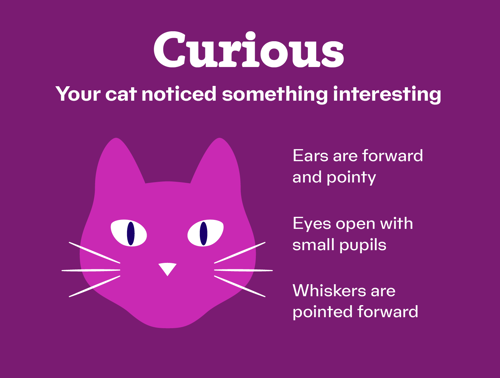
Curious

  • Your cat may have spotted something that’s interesting  
  • Ears are forward and pointy  
  • Eyes open with small pupils  
  • Whiskers are pointed forward  

An infographic about a cat feeling curious


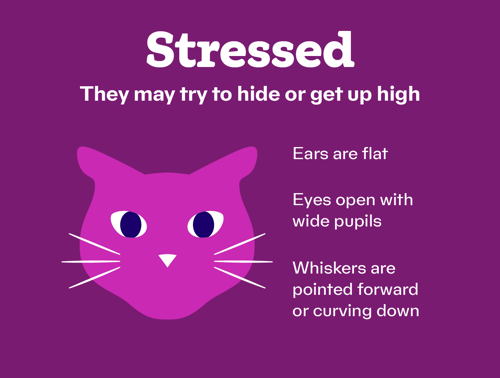
Stressed

  • Your cat may try to hide or get up high
  • Ears are flat  
  • Eyes open with wide pupils  
  • Whiskers are pointed forward or curving down  

An infographic about a cat being stressed


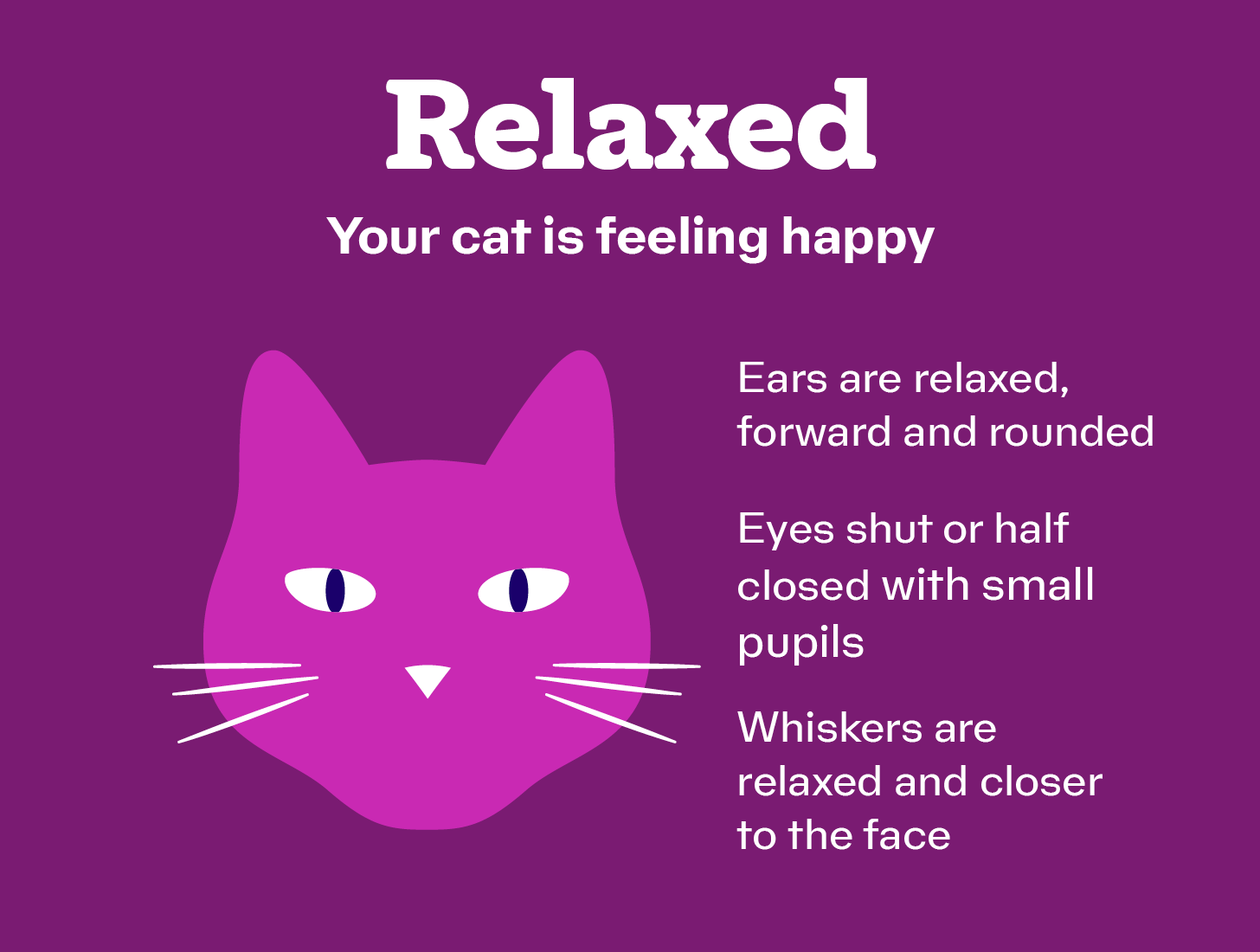
Relaxed

  • Your cat may be feeling happy
  • Ears are relaxed, forward and rounded  
  • Eyes shut or half closed with small pupils
  • Whiskers are relaxed and closer to the face   

An infographic about a cat being relaxed

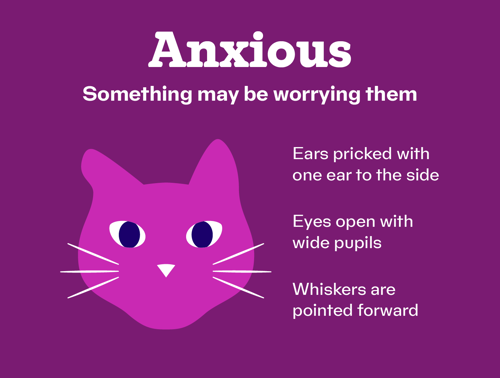
Anxious

  • Your cat may be feeling worried 
  • Ears pricked with one ear to the side   
  • Eyes open with wide pupils   
  • Whiskers are pointed forward  

An infographic about a cat feeling anxious


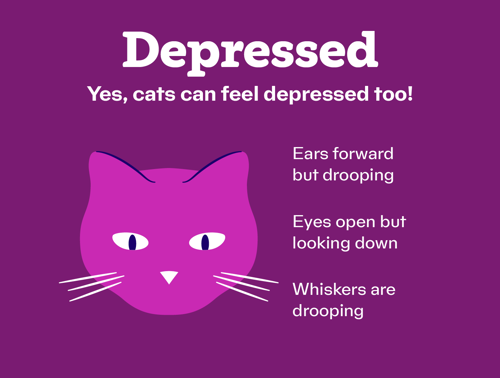
Depressed

  • Ears forward but drooping  
  • Eyes open but looking down  
  • Whiskers are drooping 

An infographic about a cat feeling depressed


How to help a stressed cat

Worried about your cat’s symptoms or change in behaviour? While there are a lot of things you can do at home to calm a stressed cat, planning in a visit to the vet should be top of your list.

If you’ve found a problem with your cat’s physical health, such as weight loss or issues with toileting, it is even more important to get them seen quickly.

Your vet may suggest things you can do at home to keep your cat calm, such as altering their environment or changing their routine.

Finding a vet

Addressing your cat’s behaviour to reduce stress

If you’re concerned about your cat’s behaviour and are struggling to reduce stress, you might be referred to a qualified behaviourist who can identify the underlying cause of the stress and design a tailored behavioural plan for your cat.

Make sure the behaviourist belongs to a regulated body like the Animal Behaviour and Training Council. They’ll be able to focus on the issue with your cat’s behaviour and help them (and you) to manage. 

One way to help reduce stress is a plug-in pheromone diffuser like FELIWAY. You simply plug it in the room where your cat spends most of their time (the living room, for example) and it can help them to reduce their anxiety. However, it should be used in combination with medical and behavioural advice as it is one piece of the puzzle to help. It may not be that effective when used as a stand-alone treatment (which is the same for most advice).

Find a cat behaviourist

What is causing my cat’s stress and how can I manage it?

There are many reasons cats can become stressed. Some cats are more sensitive than others and what affects one may not bother another cat. Circumstances that cause stress might include:

  • Cats living with other cats. This is one of the most common reasons that can cause stress in cats. They’re not naturally inclined to live with other cats, so they’ll need careful introductions if they are to get along. If you’re adopting cats, try to pick a sibling pair rather than two unfamiliar cats as they are more likely to get on. Find out more about cats and other cats 
  • Unfamiliar cats intruding into the home. Perhaps a neighbour’s cat likes to visit your home, or they’re keen to spend time in your garden? If you feel your cat is being ‘bullied’ by another, there are plenty of things you can do deter them. It’s important to note that cats being ‘bullied’ by cats in the neighbourhood can affect the relationships within the home too. Find out more about cats fighting
  • Other pets. The arrival of other pets may make a cat feel anxious. While cats and dogs can generally get along, don’t be surprised if your cat is stressed out by a new puppy in the house. A gradual introduction can help with this. Find out more about cats and dogs and other pets

  • A new baby. While cats and babies can get along (with a bit of patience!), a new baby brings with it strange smells and sounds that can be confusing to your cat. There are plenty of things you can do to prepare your cat for your new arrival, such as introducing them to sounds of a baby crying or letting them explore new items like pushchairs and nursery furniture. Find out more about cats and your pregnancy
  • Guests visiting. Whether your friends are staying for the weekend or you’ve got the family over for Christmas, having people over can cause some cats stress. Providing a hiding place where they can escape the chaos, or ideally a quiet room to themselves, will go a long way to reducing their anxiety. Find out more about cats at Christmas

  • Inappropriate or unsuitable handling. While many cats like to be fussed or stroked, some cats might find it overwhelming and stressful, and while some cats are quick to let you know they’re not happy (by pawing you to stop stroking them or biting you as a warning), other cats may not. Pay attention to your cat’s body language and make sure they always have the option to remove themselves from the interaction. That means never restraining your cat when you’re stroking them and giving them plenty of room. Find out how to pet a cat.

Free guide

Download our free guide packed full of all the information you need about managing your cat's behaviour.

Find a Cat
Donate
About us